
The Independent Living Philosophy
The Independent Living Philosophy led to a new social paradigm:
- People with disabilities are the experts on their own needs
- People with disabilities have crucial and valuable perspectives to contribute to society
- People with disabilities deserve equal opportunities to decide how to live, work, and take part in their communities.
Beginning in the 1970s with the Urban Mass Transit Act, people with disabilities have been continuously fighting for basic civil rights. The most comprehensive protection is the 1990 Americans with Disabilities Act.
Even today, these rights are under attack by those who believe in smaller government, by budget issues, and by those who just don’t think that people with disabilities have value. Advocates at all levels, local and global, continue to fight for basic civil rights.

The Next Eight Hours (2019 video)
This video by Julie Ross explains why Independent Living is so important. The video is about Texas, but many other states have similar problems with incentives for institutions. And every state has room to improve!
The IL Movement Today (Maybe remove… Make sure all links are in our resources?)
The IL Movement continues to evolve. In addition to hundreds of Centers for Independent Living, many organizations work for change. Below are links to organizations that research, advocate and remove barriers to independent living for people with disabilities.
NCIL – The National Council on Independent Living advances independent living and the rights of people with disabilities through consumer-driven advocacy. NCIL envisions a world in which people with disabilities are valued equally and participate fully.
ILRU – Independent Living Research Utilization creates opportunities for people with disabilities through research, education and consultation. Started in 1975, ILRU continues to be an important resource to Independent Living Centers and people with disabilities.
APRIL – The United Voice of Independent Living in Rural America was founded in 1986. APRIL continues do important work with youth, transportation, technology and other disability topics in rural America.
The Ed Roberts Campus is a nonprofit (501c3) corporation that has been formed by disability organizations that share a common history in the Independent Living Movement of People with Disabilities. These organizations have joined together to plan and develop a universally designed, transit-oriented campus located at the Ashby BART Station in South Berkeley.
The World Institute on Disability – has a mission to eliminate barriers to full social integration and increase employment, economic security and health care for persons with disabilities.
Video History
It’s Our Story is a national initiative to make disability history national and accessible. They have conducted over 1,000 video interviews with disability leaders across the nation. It’s Our Story.
Paul Spooner, Executive Director at MetroWest Center for Independent Living, helped create 15 videos about the IL Movement and its significance. View Paul’s videos at YouTube.
A Little History Worth Knowing
by Timothy M. Cook
The Alabama legislature declared them “a menace to the happiness…of the community.” A Texas law mandated segregation to relieve society of the “heavy economic and moral losses arising from the existence at large of these unfortunate persons.”
Ancient penal statutes for convicted felons? NO! Racial epithets from the Jim Crow era? Not quite, though these declarations did arise in that period.
Such was the treatment accorded disabled persons, especially those…with severe disabilities, by democratically elected state legislatures, in this century.
Nor was the government-mandated regime of segregation, exclusion and degradation of people with disabilities limited to the South. In every state, in inexorable fashion, the policy was to keep us out of polite society.
In Pennsylvania, disabled people officially were termed “anti-social beings;” In Washington, “unfitted for companionship with other children;” in Vermont, a “blight on mankind;” in Wisconsin, a “danger to the race;” and, in Kansas, “a misfortune both to themselves and to the public.”
In Indiana, we were required to be “segregate[d] from the world;” a Utah government report said that a “defect wounds our citizenry a thousand times more than any plague;” and, in South Dakota, we simply did not have the “rights and liberties of normal people.”
The United States Supreme Court, in an opinion by Justice Oliver Wendall Holmes upholding the constitutionality of a Virginia law authorizing the involuntary sterilization of disabled persons, ratified the view of disabled persons as “a menace.” Justice Holmes juxtaposed the country’s “best citizens” (nondisabled persons) with those who “sap the strength of the state” (disabled persons), and to avoid “being swamped with incompetence,” ruled “It is better for all the world, if instead of waiting to execute degenerate offspring for crime, or to let them starve for their imbecility, society can prevent those who are manifestly unfit from continuing their kind.”
So, the next time someone tries to explain to you that handicappism is a more “benign” form of discrimination, tell them how the segregation and exclusion of people with disabilities all began. Tell them how, historically, a lot of important decision-makers passed laws sending us away.
Leaders in the IL Movement
The history of the independent living movement is not complete without mentioning the people who made substantial contributions to the movement and to the rights and empowerment of people with disabilities.

Paul Spooner

Frank Bowe

Marca Bristo

Charlie Carr

Tim Cook

Justin Dart

Fred Fay

Judy Heumann

Harriet McBryde Johnson

Evan Kemp

Paul Longmore
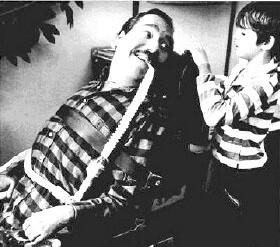
Ed Roberts

Liz Savage

Max Starkloff

Roland Sykes

Pat Wright
Timeline for Independent Living Civil Rights
Federal Civil Rights Laws
Important federal civil rights laws affecting people with disabilities:
- 1964 Civil Rights Act: prohibits discrimination on the basis of race, religion, ethnicity, national origin, and creed — later, gender was added as a protected class.
- 1970 Urban Mass Transit Act: requires that all new mass transit vehicles be equipped with wheelchair lifts. As mentioned earlier, it was twenty years, primarily because of machinations of the American Public Transit Association (APTA), before the part of the law requiring wheelchair lifts was implemented.
- 1973 Rehabilitation Act: particularly Title V, Sections 501, 503, and 504, prohibits discrimination in federal programs and services and all other programs or services receiving federal funding. As Congress was convinced that society’s barriers and prejudices hindered the civil rights of the disabled, legislation could not be interpreted in such a way to indicate it was the disabled person’s responsibility to find accommodation. (full text below)
- 1975 Developmental Disabilities Bill of Rights Act: among other things, establishes Protection and Advocacy (P & A).
- 1975 Education of All Handicapped Children Act (PL 94-142): requires free, appropriate public education in the least restrictive environment possible for children with disabilities. This law is now called the Individuals with Disabilities Education Act (IDEA).
- 1978 Amendments to the Rehabilitation Act: provides for consumer-controlled centers for independent living.
- 1983 Amendments to the Rehabilitation Act: provides for the Client Assistance Program (CAP), an advocacy program for consumers of rehabilitation and independent living services.
- 1985 Mental Illness Bill of Rights Act: requires protection and advocacy services (P & A) for people with mental illness.
- 1988 Civil Rights Restoration Act: counteracts bad case law by clarifying Congress’ original intention that under the Rehabilitation Act, discrimination in ANY program or service that is a part of an entity receiving federal funding — not just the part which actually and directly receives the funding — is illegal.
- 1988 Air Carrier Access Act: prohibits discrimination on the basis of disability in air travel and provides for equal access to air transportation services.
- 1988 Fair Housing Amendments Act: prohibits discrimination in housing against people with disabilities and families with children. Also provides for architectural accessibility of certain new housing units, renovation of existing units, and accessi bility modifications at the renter’s expense.
- 1990 Americans with Disabilities Act: provides comprehensive civil rights protection for people with disabilities; closely modeled after the Civil Rights Act and the Section 504 of Title V of the Rehabilitation Act and its regulations. The modern history of civil rights for people with disabilities is three decades old. An essential piece of this decades-long process is the story of how the Rehabilitation Act of 1973 was finally passed and then implemented. It is the story of the first organized disability rights protest.
The Rehabilitation Act of 1973
In 1972, Congress passed a rehabilitation bill that independent living activists cheered. President Richard Nixon’s veto prevented this bill from becoming law. During the era of political activity at the end of the Vietnam War, Nixon’s veto was not taken lying down by disability activists who launched fierce protests across the country. In New York City, early leader for disability, fights, Judy Heumann, staged a sit-in on Madison Avenue with eighty other activists.
Traffic was stopped. After a flood of angry letters and protests, in September 1973, Congress overrode Nixon’s veto and the Rehabilitation Act of 1973 finally became law. Passage of this pivotal law was the beginning of the ongoing fight for implementation and revision of the law according to the vision of independent living advocates and disability rights activists. Key language in the Rehabilitation Act, found in Section 504 of Title V, states that:
No otherwise qualified handicapped individual in the United States shall, solely by reason of his handicap, be excluded from the participation in, be denied the benefits of, or be subjected to discrimination under any program or activity receiving federal financial assistance.
Advocates realized that this new law would need regulations in order to be implemented and enforced.
- By 1977, Presidents Nixon and Ford had come and gone. Jimmy Carter had-become president and had appointed Joseph Califano his Secretary of Health, Education, and Welfare (HEW). Califano refused to issue regulations and was given an ultimatum and deadline of April 4, 1977. April 4 went by with no regulations and no word from Califano.
- On April 5, demonstrations by people with disabilities took place in ten cities across the country. By the end of the day, demonstrations in nine cities were over. In one city, San Francisco, protesters refused to disband.
Demonstrators, more than 150 people with disabilities, had taken over the federal office building and refused to leave. They stayed until May 1. Califano had issued regulations by April 28, but the protesters stayed until they had reviewed the regulations and approved of them.
July 26, 1990 – The Americans with Disabilities Act
AAPD (American Association of People with Disabilities) celebrates some of the groups and people who made the ADA possible. Check out the AAPD exhibit on Google’s Cultural Institute.
IL Literature
The Literature
History of Independent Living
by Gina McDonald and Mike Oxford
This account of the history of independent living stems from a philosophy which states that people with disabilities should have the same civil rights, options, and control over choices in their own lives as do people without disabilities.
The history of independent living is closely tied to the civil rights struggles of the 1950s and 1960s among African Americans. Basic issues–disgraceful treatment based on bigotry and erroneous stereotypes in housing, education, transportation, and employment — and the strategies and tactics are very similar. This history and its driving philosophy also have much in common with other political and social movements of the country in the late 1960s and early 1970s. There were at least five movements that influenced the disability rights movement. The first social movement was deinstitutionalization, an attempt to move people, primarily those with developmental disabilities, out of institutions and back into their home communities. This movement was led by providers and parents of people with developmental disabilities and was based on the principle of “normalization” developed by Wolf Wolfensberger, a sociologist from Canada. His theory was that people with developmental disabilities should live in the most “normal” setting possible if they were to expected to behave “normally.” Other changes occurred in nursing homes where young people with many types of disabilities were warehoused for lack of “better” alternatives (Wolfensberger, 1972).

The next movement to influence disability rights was the civil rights movement. Although people with disabilities were not included as a protected class under the Civil Rights Act, it was a reality that people could achieve rights, at least in law, as a class. Watching the courage of Rosa Parks as she defiantly rode in the front of a public bus, people with disabilities realized the immediate challenge of even getting on the bus.
The “self-help” movement, which really began in the 1950s with the founding of Alcoholics Anonymous, came into its own in the 1970s. Many self-help books were published and support groups flourished. Self-help and peer support are recognized as key points in independent living philosophy. According to this tenet, people with similar disabilities are believed to be more likely to assist and to understand each other than individuals who do not share experience with similar disability.
Demedicalization was a movement that began to look at more holistic approaches to health care. There was a move toward “demystification” of the medical community. Thus, another cornerstone of independent living philosophy became the shift away from the authoritarian medical model to a paradigm of individual empowerment and responsibility for defining and meeting one’s own needs.
Consumerism, the last movement to be described here, was one in which consumers began to question product reliability and price. Ralph Nader was the most outspoken advocate for this movement, and his staff and followers came to be known as “Nader’s Raiders.” Perhaps most fundamental to independent living philosophy today is the idea of control by consumers of goods and services over the choices and options available to them.
The independent living paradigm, developed by Gerben DeJong in the late 1970s (DeJong, 1979), proposed a shift from the medical model to the independent living model. As with the movements described above, this theory located problems or “deficiencies” in the society, not the individual. People with disabilities no longer saw themselves as broken or sick, certainly not in need of repair. Issues such as social and attitudinal barriers were the real problems facing people with disabilities. The answers were to be found in changing and “fixing” society, not people with disabilities. Most important, decisions must be made by the individual, not by the medical or rehabilitation professional.

Using these principles, people began to view themselves as powerful and self-directed as opposed to passive victims, objects of charity, cripples, or not whole. Disability began to be seen as a natural, not uncommon, experience in life, not a tragedy.
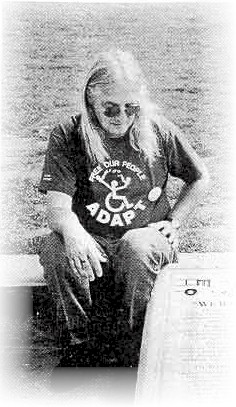
Wade Blank began his lifelong struggle in civil rights activism with Dr. Martin Luther King, Jr. to Selma, Alabama. It was during this period that he learned about the stark oppression, which occurred against people considered to be outside the “mainstream” of our “civilized” society. By 1971, Wade was working in a nursing facility, Heritage House, trying to improve the quality of life of some of the younger residents. These efforts, including taking some of the residents to a Grateful Dead concert, ultimately failed. Institutional services and living arrangements were at odds with the pursuit of personal liberties and life with dignity.
In 1974, Wade founded the Atlantis Community, a model for community-based, consumer-controlled, independent living. The Atlantis Community provided personal assistance services primarily under the control of the consumer within a community setting. The first consumers of the Atlantis Community were some of the young residents “freed” from Heritage House by Wade (after he had been fired). Initially, Wade provided personal assistance services to nine people by himself for no pay so that these individuals could integrate into society and live lives of liberty and dignity. In 1978, Wade and Atlantis realized that access to public transportation was a necessity if people with disabilities were to live independently in the community. This was the year that American Disabled for Accessible Public Transit (ADAPT) was founded.
On July 5-6, 1978, Wade and nineteen disabled activists held a public transit bus “hostage” on the corner of Broadway and Colfax in Denver, Colorado. ADAPT eventually mushroomed into the nation’s first grassroots, disability rights, activist organization.
In the spring of 1990, the Secretary of Transportation, Sam Skinner, finally issued regulations mandating lifts on buses. These regulations implemented a law passed in 1970-the Urban Mass Transit Act-which required lifts on new buses. The transit industry had successfully blocked implementation of this part of the law for twenty years, until ADAPT changed their minds and the minds of the nation. In 1990, after passage of the Americans With Disabilities Act (ADA), ADAPT shifted its vision toward a national system of community-based personal assistance services and the end of the apartheid-type system of segregating people with disabilities by imprisoning them in institutions against their will. The acronym ADAPT became “American Disabled for Attendant Programs Today.” The fight for a national policy of attendant services and the end of institutionalization continues to this day.
Wade Blank died on February 15, 1993, while unsuccessfully attempting to rescue his son from drowning in the ocean. Wade and Ed Roberts live on in many hearts and in the continuing struggle for the rights of people with disabilities.
These lives of these two leaders in the disability rights movement, Ed Roberts and Wade Blank, provide poignant examples of the modem history, philosophy, and evolution of independent living in the United States. To complete this rough sketch of the history of independent living, a look must be taken at the various pieces of legislation concerning the rights of people with disabilities, with a particular emphasis on the original “bible” of civil rights for people with disabilities, the Rehabilitation Act of 1973.
References
DeJong, Gerben. “Independent Living: From Social Movement to Analytic Paradigm,” Archives of Physical Medicine and Rehabilitation 60, October 1979.
Wolfensberger, Wolf The Principle of Normalization in Human Services. Toronto: National Institute on Mental Retardation, 1972.
Important Writings on Independent Living
No Pity- People with Disabilities Forging a New Civil Rights Movement was written by Joseph P. Shapiro in 1993. No_Pity by Shapiro
The Independent Living Service Model – Historical Roots, Core Elements and Current Practice was prepared by Mary Ann Lachat in 1988 and edited again in 2002. This publication traces the IL Movement from concept to implementation in detail. IL Service Model by Lachat
The Independent Living Movement: Its Roots and Origin is a slide presentation prepared by Paul Spooner, Jini Fairley and Stephanie Poitras of the MetroWest Center for Independent Living. Roots and Origins by MWCIL
The Challenge of Middle Age for the Independent Living Movement by Gerben DeJong was written around 1988 – 10 years after the passage of important Amendments to the Rehabilitation Act. These amendments included Title VII which supplied grants to Independent Living Centers. Challenge of Middle Age for IL Movement by DeJong
Consumer Control in Independent Living was prepared in 1988, and examines the principle of Consumer Control and how this principle is actualized in policy and practice. Consumer Control in IL
A Philosophical Foundation for the Independent Living and Disability Rights Movements by Peg Nosek, Yayoi Narita, Yoshiko Dart and Justin Dart was written in 1982 argues that the movement requires a basic shift in society which starts with each individual. Philosophical Foundation for IL and Disability Rights Movement
The Movement for Independent Living: A Brief History by Margaret Shreve was written around 1982. Movement for IL by Shreve
The Independent Living Movement: Where We’ve Been, Where We’re Going is the participants’ manual from a national teleconference and webcast event in 2004. The manual is a collection of important writings about the history, philosophy and implementation of the IL Movement. IL Movement Where We Have Been Where We Are Going
Freedom of Movement – Independent Living History and Philosophy is written by Steve Brown of the Institute of Disability Culture in 2000. Mr. Brown has provided a well-researched history and articulate view of the IL Movement. Freedom of Movement by Brown
Understanding and Accommodating People with Multiple Chemical Sensitivity in Independent Living by Pamela Reed Gibson, PhD. (James Madison University) was published in 2002. Multiple Chemical Sensitivity in IL by Reed
Independent Living and Traditional Paradigms by Gerben DeJong in 1978 is a chart highlighting and clarifying the difference between the traditional medical model and the independent living paradigm. IL and Traditional Pardigms by DeJong
An Evaluation of the Disability Experience by the Life Without Limits Project was written around 2006. This writing shows that while much progress has been made, there is still much to be done. The authors provide some ideas for how to achieve more. State of Disability in America
The Concept of Independent Living – A New Perspective in Rehabilitation by Ingolf Österwitz was written in 1994. This document studies what independent living means. Concept of IL by Osterwitz
A Little History Worth Knowing by Timothy M. Cook is a classic. History Worth Knowing by Cook
Tim Cook, 38, Ex-Civil Rights Aide Who Set Off Storm is a brief biography and obituary written in 1991 by Frank J. Prial. Cook Obituary by Prial
The Reverend Wade Blank, 1940-1993 is a tribute to Wade Blank written by Justin Dart in 1993. Tribute to Wade Blank by Dart
Wade Blank’s Liberated Community by Laura Hershey is abridged from The Ragged Edge shortly after Wade Blank’s death in 1993. Wade Blanks Liberated Community by Hershey